
Planning a Mexico City World Cup 2026 trip? Estadio Azteca hosts the tournament opener June 11, 2026 plus four more matches. This Mexico City World Cup 2026 travel guide covers matches, CDMX hotels, transit, food, and essential tips.
Mexico City World Cup 2026 Travel Guide: Your Full Mexico City World Cup 2026 Trip Plan
The Complete Mexico City World Cup 2026 Travel Guide
Five matches at Estadio Azteca, including the Opening Match on June 11 — where Mexico kicks off a tournament that started at this same stadium in 1970 and 1986. First city in history to host three World Cups. Here’s how to do CDMX right: the altitude, the tacos, the Metro, and the one neighborhood every foreign fan gets wrong.
Mexico City is hosting five FIFA World Cup 2026 matches at Estadio Azteca — including the Opening Match on June 11, where Mexico plays South Africa to kick off the tournament. This isn’t just a WC city — it’s THE WC city. Azteca is the only stadium to host two World Cup Finals (1970 & 1986), birthplace of Maradona’s “Hand of God,” and now the first venue ever to host matches across three separate tournaments.
This guide is a foreign-visitor’s cheat sheet to CDMX — altitude, peso spending, Spanish-first neighborhoods, the real taco scene (not the Versailles of Mexican food), and the few things tourists consistently get wrong. Written for international fans flying in for the opener. For official tournament details, see the FIFA Fan Festival Mexico City and FIFA World Cup 2026 schedule. Part of our World Cup 2026 Host Cities Travel Guide series.
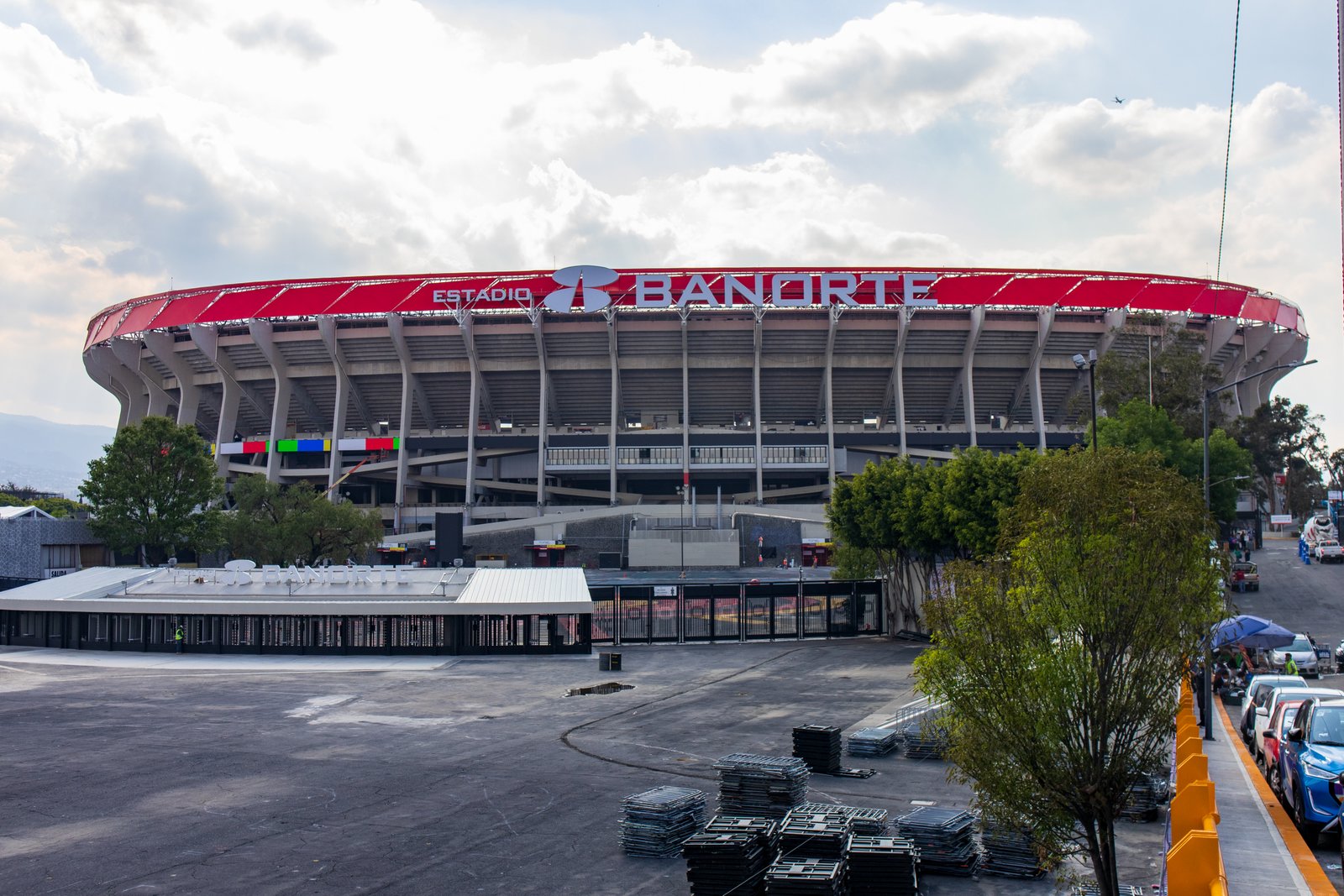
Every Mexico City Match at Estadio Azteca
Estadio Azteca sits in southern Mexico City in the Coyoacán district, a 45-minute Metro ride from Centro Histórico. It’s being renovated for WC 2026 with a soccer capacity around 87,000 — still one of the biggest stadiums in the tournament, and at 7,350 ft elevation the highest by a wide margin. Here’s the confirmed slate (check the official FIFA schedule for any late changes):
| Date | Kick-off (CT) | Match | Stage |
|---|---|---|---|
| Thu, Jun 11 | 2:00 PM | Mexico vs. South Africa (Opening Match) | Group |
| Wed, Jun 17 | 9:00 PM | Uzbekistan vs. Colombia | Group |
| Wed, Jun 24 | 8:00 PM | Czechia vs. Mexico | Group |
| Tue, Jun 30 | 8:00 PM | Winner Group A vs. 3rd Group C/E/F/H/I | Round of 32 |
| Sun, Jul 5 | 7:00 PM | Winner M79 vs. Winner M80 | Round of 16 |
The Opening Match is the single hardest ticket in the tournament. Mexico home matches (Jun 11 opener, Jun 24 vs. Czechia) will be the most electric atmospheres any World Cup visitor can experience — 87,000 fans, national flags, a pre-match mariachi ceremony, and altitude that makes it sound twice as loud. Colombia vs. Uzbekistan on Jun 17 is a softer ticket with massive Colombian fan presence.
This Mexico City World Cup 2026 match slate is one of the most stacked in the tournament — plan your trip around the matchups that matter most to you.
Take the altitude seriously. CDMX sits at 2,240 meters / 7,350 feet. You’ll feel tired walking up stairs for the first 24–48 hours. Drink water constantly, skip alcohol the first night, and don’t plan hikes or heavy exercise for your first day. The stadium is loud partly because the atmosphere is genuinely thinner — sound carries differently. First-time visitors often underestimate this.
Getting To Estadio Azteca
Mexico City has genuinely excellent public transit and terrible traffic. The two cancel out into one obvious rule: take the Metro. Three real options:
1. Metro + Light Rail (the obvious winner)
Take Metro Line 2 (blue) south to Tasqueña Station, then transfer to the Xochimilco Light Rail (Tren Ligero) to Estadio Azteca Station. Five-minute walk from the station to the gates. Total time from Centro Histórico: about 45–60 minutes. Fare: roughly 6–7 pesos (under $0.50 USD each way) — the cheapest stadium transit of any host city on Earth. Get an Integrated Mobility Card at any Metro station for unified access across Metro, Metrobús, and Light Rail.
2. Uber / Didi (rideshare)
Uber works citywide and is the accepted tourist default. Didi is the local rideshare and is often cheaper. Expect 45–90 minutes from Centro or Roma on match days, with fares around 200–350 pesos ($10–$18 USD). Never take a street taxi to the stadium — use the app. Traffic on the Viaducto and Tlalpan corridor during match-day rush is brutal.
3. Driving and parking
Azteca has limited official parking — expect to pay 300–600 pesos and book in advance via the stadium site. Arrive three hours pre-match minimum. Not recommended for international visitors; you’ll spend more time finding the lot than the match is worth.
Where to Stay: The Neighborhoods Actually Worth Picking
Mexico City is enormous and not all neighborhoods are equal for tourists. International visitors often default to the wrong areas (either too expensive or too far from food/nightlife). Six legitimate options, with honest trade-offs:
Tree-lined streets, Art Nouveau buildings, the densest concentration of world-class restaurants and bars in Latin America (Pujol, Contramar, Licorería Limantour). Walking distance to Condesa, 20 minutes by Uber to Centro. Boutique hotels and Airbnbs dominate. The visitor sweet spot.
Roma’s slightly quieter sibling, centered on Parque México and Av. Amsterdam’s oval loop. Brunch spots, coffee shops, Art Deco buildings, and a walkable calm that Roma doesn’t quite match. Slightly cheaper than Roma with easier parking if you rent a car.
CDMX’s most upscale district — luxury shopping, corporate hotels, Michelin-level dining at Pujol and Quintonil. Safe, clean, very international. The pick for first-time visitors nervous about Mexico City. Farther from the real neighborhood character of Roma/Condesa.
Walking distance to the Zócalo Fan Festival, Metropolitan Cathedral, National Palace, Templo Mayor. Historic hotels (Gran Hotel, Zocalo Central) mix with Airbnbs. The trade-off is nighttime quiet streets and limited food scene compared to Roma. Best for fan-fest-focused trips.
Between Roma and Polanco, home to the best new bar and restaurant openings of the last few years (Hanky Panky, Handshake Speakeasy, Café de Nadie). Still affordable, walkable, and close to everything. For travelers on their second CDMX trip.
Colonial cobblestones, the Frida Kahlo Museum, and genuine CDMX character. Problem: far from Roma/Condesa food, limited nightlife, and a 30-minute Uber to Metro lines. Great to visit, not great to stay. Exception: if you’re chasing Frida-specific pilgrimage.
✓ One Key rewards across brands
Traveling with a group, or staying more than a week?
Mexico City has genuinely excellent Vrbo inventory — full apartments in Roma and Condesa for $120–$200/night that beat most Polanco hotels on space, kitchen access, and neighborhood character. For groups of 3+ watching multiple matches, Vrbo is the obvious win. Just confirm altitude-friendly amenities (oxygen on request, elevator if you’re on floor 4+).
Opening-match week (Jun 10–13) will be the most crowded stretch in CDMX hotels ever — it’s the world’s biggest event starting in the world’s biggest city. Prices will easily 2–3x baseline. Book by early May or accept Polanco luxury pricing as your only option.
Fan Festival & The Best Bars to Watch Matches
The FIFA Fan Festival Mexico City takes over the Zócalo — the main plaza of historic Mexico City and one of the largest city squares in the world — for the full 39 days from June 11 to July 19. Expect live broadcasts on massive LED screens, a concert stage, an immersive exhibition about the Mesoamerican ball game (the ancient ancestor of modern football), food vendors, and a scale of programming that no other host city matches. Beyond the Zócalo, all 16 of Mexico City’s municipalities will have designated viewing spaces.
Best bars and watch parties (CDMX is an elite bar city)
Consistently ranked in the World’s 50 Best Bars. Book ahead for match nights. Cocktail program is legitimately world-class — the Mexican Mule and the Margarita Al Pastor are signatures. Atmosphere transforms for Mexico matches.
Unmarked door, password-required reservation, craft cocktail experience. Book two weeks ahead for WC dates. Smaller screens, more intimate feel — best for late-stage matches where you want conversation.
Classic Mexican cantina atmosphere with mariachi, mezcal, and locals. Screens for matches, loud cheering for Mexico goals. This is where you watch Mexico play, full stop. Skip the tourist cantinas downtown and come here.
1876 bar with a bullet hole in the ceiling from Pancho Villa. Historic, touristy, but genuinely atmospheric. Skip it for a regular dinner; perfect for a pre-match drink when the Fan Fest is across the square.
Part bar, part salsa/danzón ballroom. On match days, the TVs take over; after the final whistle, the dance floor opens. Mexican families and regulars, minimal English. Genuine local experience.
When Mexico plays, every plaza, park, and sidewalk bar becomes a watch party. During the Opening Match, go to the Fan Fest. During Mexico vs. Czechia, pick any Roma or Condesa plaza, order a michelada, and join the 100 strangers screaming at the big screen.
What To Actually Eat In Mexico City
CDMX is arguably the best food city in the Americas. Street food, markets, and chef-driven restaurants all operate at a level that makes most US cities look sad. The rule: eat at the stalls with lines, skip the hotel restaurants, and save one night for Pujol or Contramar.
Street tacos & mercados
Since 1959. The original Al Pastor stand in CDMX. Tiny order window, no seating, about 15 pesos per taco. Goes down a hallway — not a full restaurant. The gold standard. Lunch only, cash only.
Open 24 hours on calle Bolívar. Suadero, longaniza, campechana (mix). 25 pesos per taco. Eaten standing. Post-bar food perfected. Bring cash.
Claims to have invented tacos al pastor in 1966. Sit-down restaurant, cleaner than the street stands, takes cards. Al pastor with pineapple is the move. Fine for first-time visitors uncomfortable with street food.
Stalls selling food from across Latin America — Cuban, Colombian, Argentine, Venezuelan. Tables fill fast at lunch. Great for groups with picky eaters. Bring cash; most stalls don’t take cards.
Chef-driven & landmark restaurants
Enrique Olvera’s flagship. One of the World’s 50 Best Restaurants year after year. Mole madre (a mole that’s been aging for 2000+ days), taco omakase, and a tasting-menu experience that reframes what Mexican food can be. Book 3–4 weeks ahead. ~2,800 pesos per person ($140 USD).
Lunch-only seafood institution. Signature split-fish (red & green salsa on same grilled snapper) and tuna tostadas that changed CDMX dining. Walk-ins at 1:00 PM or prepare to wait 45 minutes. 600–1000 pesos per person.
Another World’s 50 Best regular. Jorge Vállejo’s modern-Mexican tasting menu with herbs and produce from the restaurant’s own garden. Slightly easier reservation than Pujol but still book 2–3 weeks ahead.
The CDMX brunch spot. Chilaquiles, molletes, huevos rancheros, handmade tortillas. Owned by Pujol’s former sous chef Eduardo García. Cafeteria-style seating, arrive before 11:30 AM for tables. ~250 pesos per person.
Getting Around Mexico City
CDMX is enormous — 21 million people across the metro area — but the transit network is surprisingly manageable and dramatically cheap by international standards. Strategy: Metro for long hops, walking within Roma/Condesa, Uber for anywhere else.
From the airports
Benito Juárez International (MEX) is in the east of the city, 25 minutes by Uber from Roma/Condesa (about 180–300 pesos / $9–$15 USD depending on traffic). Metro Line 5 runs from MEX to the city but is not recommended for arrivals with luggage — crowded and with petty-theft risk. Felipe Ángeles (NLU) is the newer secondary airport, 45 miles north; used mostly by Volaris and VivaAerobus. Uber from NLU to Roma runs 700–1000 pesos ($35–$50 USD).
Metro
12 lines, 195 stations, 5 peso fare ($0.25 USD). Crowded at rush hour, efficient, and covers every part of the city you’ll want to visit. Key lines for fans: Line 2 (blue) to the stadium via Tasqueña, Line 1 (pink) for Roma/Condesa connections, Line 3 (green) for Coyoacán. Never use the Metro during the 6–8 PM rush hour unless you like standing pressed against strangers.
Uber, Didi & street taxis
Uber and Didi both work citywide. Didi is usually cheaper by 15–25%. Avoid street taxis. Even registered ones occasionally run “express kidnapping” routes in certain areas — not worth the risk when rideshare is plentiful and cheap.
Rental car
Don’t rent a car in CDMX. Traffic, unfamiliar driving customs, parking challenges, and occasional police stops targeting foreigners make this the wrong move. Save it for Teotihuacán day trips (rental from NLU works) or skip entirely.
Things To Do Beyond The Matches
Mexico City rewards curious travelers. Rest days should be filled with museums, pyramids, mercados, and at least one trip to the canals. Six picks that beat a second Frida Kahlo photo-op:
45 miles north of CDMX. Climb the Pyramid of the Sun, walk the Avenue of the Dead, duck into the Pyramid of the Moon. Go by organized tour (easier) or rental car. Go early — it’s hot and exposed by noon. A once-in-a-lifetime experience.
The best archaeology museum in Latin America, arguably anywhere. Aztec Sunstone, Olmec colossal heads, Mayan codices. Set aside 3–4 hours minimum. Adjacent Chapultepec Park for post-museum walks.
Frida’s actual house in Coyoacán, preserved as she left it. Book timed entry 2–3 weeks ahead — walk-up is impossible. Combine with lunch at Los Danzantes in Coyoacán’s main plaza and a stroll through the weekend market.
Rent a colorful trajinera (flat-bottomed boat), float the UNESCO-heritage canals with floating mariachi bands and food vendors pulling alongside. Bring pesos. Sunday is party day; weekday is quieter and more romantic. Bring sunscreen and mezcal.
Mexico’s masked wrestling. Tuesday and Friday night shows. Cheap tickets (50–200 pesos), genuinely wild atmosphere, peak CDMX cultural experience. Take Metro Line 9 to Cuauhtémoc.
The Aztec ruins in the heart of Mexico City, next to the Zócalo Fan Festival. Combine with Metropolitan Cathedral, National Palace (Diego Rivera murals), and lunch at El Cardenal. Best done on a match-free morning.
Rest days in CDMX? Book tours before the tournament rush.
Viator has Teotihuacán pyramid tours with hotel pickup, Frida Kahlo skip-the-line tickets, Xochimilco trajinera packages, Puebla day trips, Mercado food walks, and lucha libre VIP experiences. All with free cancellation up to 24 hours before. CDMX tours fill up earliest for Opening Match week; lock them in now.
Essential Travel Tips for International Fans
Weather & packing
June in CDMX: 75°F average high, 55°F night, and afternoon rainy season thunderstorms starting around 4–6 PM. Pack layers, a compact rain jacket, comfortable walking shoes (sidewalks are uneven), and sunscreen (high altitude = stronger UV). Evenings can be genuinely cool — bring a sweater or light jacket for the stadium night matches.
Altitude
2,240 meters / 7,350 feet. Most visitors feel mild shortness of breath and fatigue for 24–48 hours. Drink water constantly, skip or limit alcohol the first night, avoid heavy exercise Day 1. Altitude sickness (headache, nausea) is uncommon but possible — take it slow.
Visa & entry requirements
Most Western European, Canadian, US, Japanese, South Korean, Australian, and Argentine passports do not need a visa for Mexico — you get a free tourist permit at the border valid up to 180 days. Verify current requirements for your passport at the Mexican consulate site before travel — some visa-free countries have a separate electronic pre-authorization (SAE).
Money & payments
Peso (MXN). ~20 pesos to $1 USD in 2026. Use bank ATMs (BBVA, Citibanamex, Santander) inside bank branches for the best exchange rate — avoid airport ATMs and hotel currency exchange. Cards work at restaurants and bars; street food and mercados are cash-only. USD is accepted at many Polanco and Centro spots but always at a worse rate.
Water & food safety
Never drink tap water. Bottled water only, including for brushing teeth. Ice at reputable restaurants is made from filtered water (safe). Raw seafood at established ceviche places is fine; street ceviche is a gamble. Bring Imodium or equivalent just in case — even locals occasionally get upset stomachs.
Tipping & language
Spanish is essential — English is limited outside tourist zones. Learn 10 basic phrases. Tipping is less formal than the US: 10–15% at restaurants (check the bill for “servicio” which may already include it), 10 pesos per drink at bars, round up Uber fares.
Flying to Mexico City for the Opening Match? Get covered first.
Mexican healthcare for tourists is decent but cash-pay at private clinics adds up fast, and trip interruption happens more often than you’d think. SafetyWing Nomad Insurance covers emergency medical, hospital stays, trip interruption, and evacuation starting around $45/week. Particularly useful at altitude when minor illness is more common than at sea level.
A CDMX Local’s Pro Tips
- Lock your Mexico City World Cup 2026 hotels and transit early. Prices for the popular match weeks go up fast — waiting until late May usually means paying double or pivoting to a farther neighborhood.
- Never take street taxis. Uber or Didi only, everywhere, always. Even in touristy Polanco.
- Bottled water, including for tooth-brushing. Your hotel provides large bottles; buy more at OXXO.
- Get a Telcel SIM card at the airport or an OXXO. 200 pesos for 30GB and unlimited WhatsApp/calls. Service is excellent citywide.
- Download Google Maps offline. Also Google Translate with Spanish offline. These save you daily.
- “Ahorita” means anywhere from “now” to “sometime this week.” Accept that time works differently.
- The Zócalo Fan Fest is the heart of everything. Plan at least one full evening there, even on a non-match day. Free.
- Altitude affects you. Drink water. Skip day-one alcohol. Or learn this lesson the expensive way.
- Pujol is worth the $140; Contramar is worth the wait. Book Pujol 4 weeks ahead.
- Opening Match hotel prices are peak. Every other date is substantially cheaper. Plan accordingly.
- Roma > Polanco for the authentic CDMX feel. Polanco is for safety + luxury; Roma is for actual neighborhood character.
Final Verdict: Your Mexico City World Cup 2026 Playbook
If you’re flying in for the Opening Match (June 11) — stay in Roma Norte or Centro, take the Metro to Azteca, eat at Lalo! for breakfast and El Huequito for lunch, watch pre-match at the Zócalo Fan Fest.
If you’re doing all three Mexico group matches — base in Roma or Condesa, combine rest days with Teotihuacán and the Anthropology Museum, splurge on one Pujol or Contramar meal, hit the Zócalo Fan Fest once.
If you’re here to experience CDMX as much as the tournament — 7+ days, add Xochimilco, lucha libre, a Coyoacán day, a Puebla day trip, and 3–4 chef-driven restaurants. This is a food-and-culture trip with football attached.
For your Mexico City World Cup 2026 trip, whatever you do — respect the altitude, use Uber/Didi only, eat where the locals line up, and embrace the fact that CDMX isn’t a US city and shouldn’t be compared to one. This is the city that invented the modern World Cup atmosphere. Show up ready.
Frequently Asked Questions
How do I get to Estadio Azteca by Metro?+
Take Metro Line 2 (blue) south to Tasqueña Station, then transfer to the Xochimilco Light Rail (Tren Ligero) to Estadio Azteca Station. Total fare is about 7 pesos (under $0.50 USD each way) — the cheapest stadium transit of any host city.
Where is the Mexico City World Cup 2026 FIFA Fan Festival?+
The Fan Festival takes over the Zócalo — Mexico City’s main plaza and one of the largest in the world — for the full 39 days from June 11 to July 19. Live match screenings, concerts, a Mesoamerican ball game exhibition, and food vendors.
Do US tourists need a visa for Mexico?+
No. US, Canadian, European, Japanese, South Korean, Australian, and Argentine passports enter visa-free with a tourist permit valid up to 180 days. Verify current requirements at the Mexican consulate site before travel.
Is altitude a real problem for tourists?+
Yes. Mexico City sits at 2,240m / 7,350ft. Most visitors feel mild shortness of breath and fatigue for 24–48 hours. Drink water constantly, skip alcohol the first night, and avoid heavy exercise Day 1. The stadium is loud partly because the atmosphere is thinner.
Which Mexico City neighborhood is best for tourists?+
Roma Norte is the visitor sweet spot — tree-lined streets, world-class restaurants (Pujol, Contramar), and the best bar scene in the city. Polanco is the safer/luxury alternative at 2x the price.
Disclosure: This guide may contain affiliate links. If you book through them we may earn a small commission at no extra cost to you — it helps keep TheGreatReviewer ad-free. All recommendations reflect our actual, unbiased opinions, and no brand paid for placement. Prices and availability quoted are estimates as of April 2026 and subject to change.
Travel insurance for World Cup 2026?
SafetyWing covers stadium delays, lost luggage, and medical costs for international fans — with flexible monthly plans built for travelers.
Get a Quote →